Innovative Technology Based on the Use of New Environmentally Friendly Binding Materials for the Foundry Industry
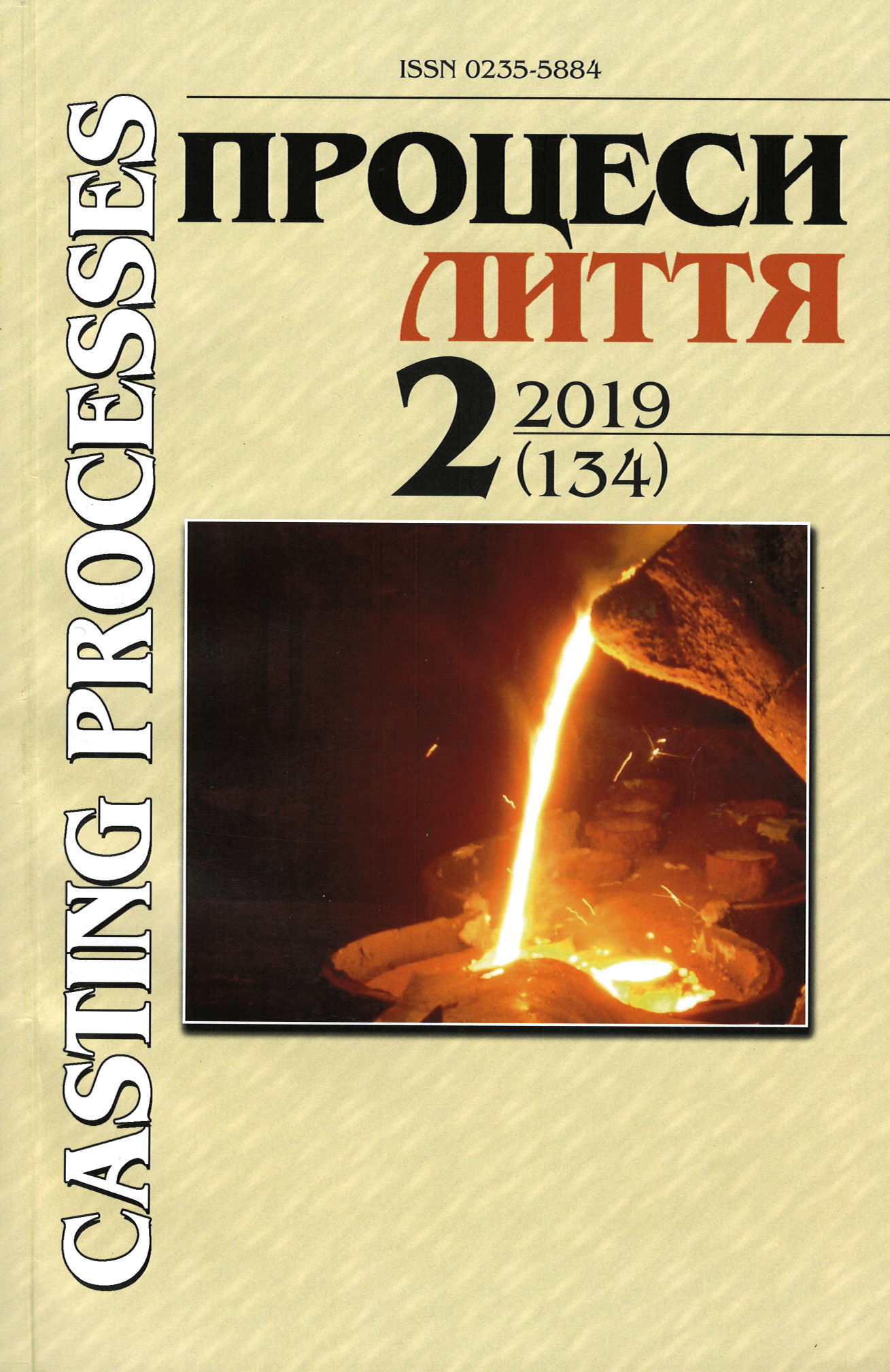
Processy litʹâ, 2019, Tom 134, №2, p.21-34
Keywords:
foundry industry, innovative technologies, binding materials, vegetable raw materials, binding ability, environmental safety, environmental efficiencyAbstract
Received 23.01.2019
UDK 621.742.22
Traditionally the main procurement basis of machine building industry is the foundry. The share of its products in the structure of its needs accounts for 40 to 60 %, while the share of castings produced in sand single forms is about 80 %. This situation determines the importance and significance of ensuring the appropriate quality of the mold and compliance, according to these conditions, environmental safety in the foundry as a whole. As a result of the study it is found that the binding materials is the determining component in the casting process. This component determines not only the technological capabilities of the production process, but also a set of issues arising at different stages of its implementation: the cost of the process,sanitary conditions of work of the personnel of the foundry, ecоlogical state in the area where the enterprise is located. The binding compounds are the main sources of emissions into the atmosphere of highly toxic substances of the first and second classes of danger (benzapyrene, formaldehyde, acrolein and so on). An alternative to the dominance of synthetic resins, in modern conditions of the development of foundry production, there are lignosulfonate materials (LST): environmentally friendly, not expensive and, significantly, are not prone to rise in price, since the primary source of their production are the products of processing of plant raw materials – a natural renewable resource. In today's market of binders, this class of materials is represented by technical lignosulfonates, but their use as a casting binder is not constrained satisfactory quality indicators (low binding capacity, unstability of properties, high hygroscopicity of cores and molds made on the basis of LST), with respect to the technical requirements of many technologies of foundry production. On the basis of the created casting binders compositions of core mixtures have been developed to reduce the volume of toxic gas emissions in comparison with mixtures based on known and widely used binders such as KO and УCK in 2,7–14 times, which allowed to introduce the content of harmful substances in gas emissions to the level of maximum allowed concentration. This was made possible by the use of a mixture of environmentally friendly binder materials based on LST with increased strength.
References
Shinsky, O. I. (2012) Ecology, technique and economy of foundry production in Ukraine. Investment newsletter the 3rd International investment and industrial forum, Kiev: Izd. The chamber of Commerce, pp. 34–36 [in Russian].
Shinsky I. O., Shinsky O. Technology, economy and ecology of foundry production of Ukraine. URL: www.lgm.com.ua/press_publications.aspx [in Russian].
Gulyaev, B. B., Gornushkin, O. A., Kuzin, A. V. (1987) Molding processes. L.: Mashinostroenie, 264 p. [in Russian].
Berg, P. P. (1963) Molding materials. Moscow: Mashgiz, 408 p. [in Russian].
Berg, P. P. (1944) Molding materials and mixtures. Moscow: Mashinostroenie, 156 p. [in Russian].
URL: www.ukrstat.gov.ua (State statistics service of Ukraine).
Doroshenko, S. P., Avdokushin, V. P., Rusin, K., Matishak, I. (1990) Molding materials and mixtures. K.: Vyshcha shkola; Prague: SNTL, 415 p. [in Russian].
Zhukovsky, S. S. (1989) Strength of the mold. Moscow: Mashinostroenie, 288 p. [in Russian].
Boldin, A. N., Zhukovsky, S. S., Poddubny, A. N., Yakovlev, A. I., Krokhotin, V. L. (eds) (2001) Ecology foundry. Proc. the manual for high schools. Bryansk: Publishing house of BSTU, 315 p. [in Russian].
Boldin, A. N., Yakovlev, I. A., Teplyakov, S. D. (2010) Engineering ecology of foundry. Textbook. Moscow: Mashinostroenie, 352 s. [in Russian].
Zhukovskiy, S. S., Anisovich, G. A., Davydov, N. I. et al. (1993) Molding materials and technology mold: Handbook. Moscow: Mashinostroenie, 432 p. [in Russian].
Semik, A. P. (1987) Molding and core mixture with the binder materials on the basis of technical lignosulfonates. Dissertation of doctor of technical sciences. Kiev, 225 p. [in Russian].
Evstifeev, E. N. (2007) The development of low-toxic binding materials and energy-saving mixes on their basis for the improvement of manufacturing techniques of foundry cores and molds for castings: avtoref. dys. … doct. tech. nauk: Rostov-on-don, 20 p. [in Russian].
Platonov, B. N., Shaposhnikov, Yu. K., Masleeva, O. V., Stepanova, M. N. (1989) Prevention of carcinogenic situations in foundry. Foundry, no. 2, p. 26–27 [in Russian].
Downloads
Published
How to Cite
Issue
Section
License
Copyright (c) 2019 Ю. О. Свинороєв

This work is licensed under a Creative Commons Attribution 4.0 International License.